
Flame Photometer
Overview
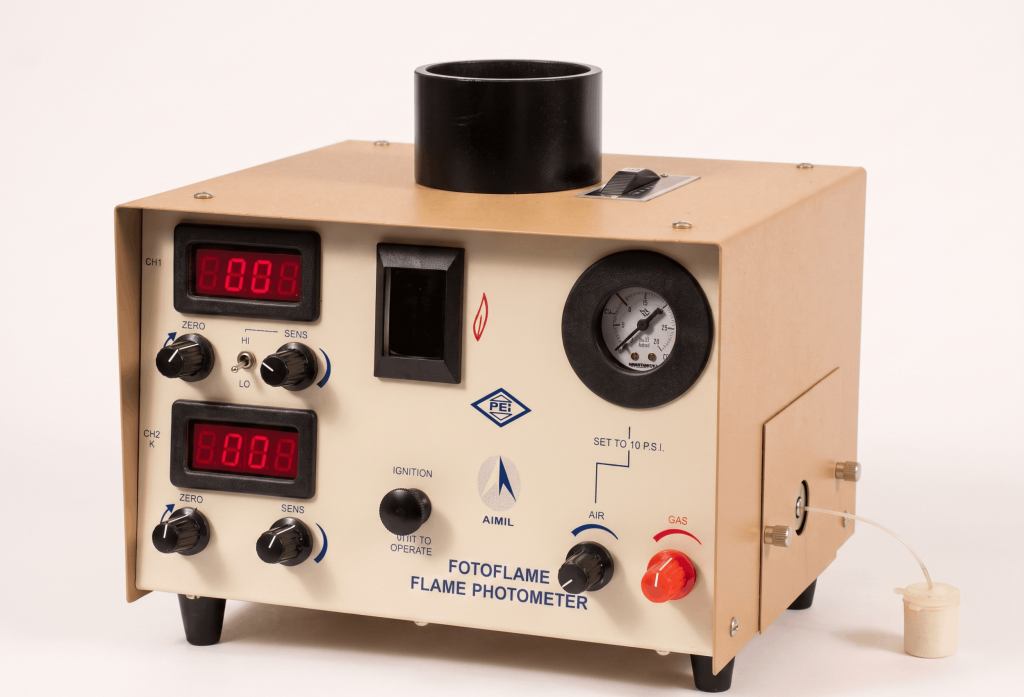
The Flame Photometer is an analytical instrument used to determine the concentration of specific metal ions in liquid samples by measuring the intensity of light emitted when the sample is introduced into a flame. It is widely used in clinical, pharmaceutical, agricultural, environmental, food, and research laboratories for rapid and accurate elemental analysis.
Principle of Operation
The sample solution is aspirated into a flame where the metal ions become excited due to the high temperature. As the excited atoms return to their ground state, they emit light at characteristic wavelengths. The emitted light is measured by the detector, and the intensity is directly proportional to the concentration of the element present in the sample.
Key Features
- Rapid and accurate elemental analysis
- High sensitivity and measurement precision
- Digital display with user-friendly operation
- Stable flame system for reliable results
- Automatic zero and calibration functions
- Multi-element analysis capability
- Low sample consumption
- Robust and durable construction
- Suitable for routine laboratory applications
Main Components
- Nebulizer
- Atomizer
- Burner Assembly
- Flame System
- Optical Filters
- Photodetector
- Amplifier
- Digital Display
- Gas Control System
- Sample Aspiration Unit
Technical Specifications
| Parameter | Specification |
|---|---|
| Instrument Type | Flame Photometer |
| Detection Method | Flame Emission Spectroscopy |
| Elements Measured | Sodium (Na), Potassium (K), Lithium (Li), Calcium (Ca), Barium (Ba) (model dependent) |
| Display | Digital LCD/LED |
| Sample Introduction | Automatic Aspiration |
| Fuel Gas | LPG, Propane, or Natural Gas (model dependent) |
| Air Supply | Built-in Compressor or External Air Source |
| Power Supply | 220–240 V AC, 50/60 Hz |
Applications
- Clinical electrolyte analysis
- Pharmaceutical quality control
- Water quality testing
- Soil and fertilizer analysis
- Food and beverage testing
- Agricultural research
- Environmental monitoring
- Chemical laboratories
Benefits
- Fast analysis with accurate results
- Simple operation and easy calibration
- Reliable and repeatable performance
- Low maintenance requirements
- Suitable for routine elemental analysis
- Cost-effective laboratory solution
Sample Types
- Water samples
- Serum and biological fluids
- Pharmaceutical formulations
- Food and beverage samples
- Soil extracts
- Fertilizer solutions
- Chemical solutions
Industries Served
- Pharmaceutical Industry
- Clinical and Diagnostic Laboratories
- Food and Beverage Industry
- Agricultural Laboratories
- Environmental Testing Laboratories
- Chemical Manufacturing
- Universities and Research Institutions